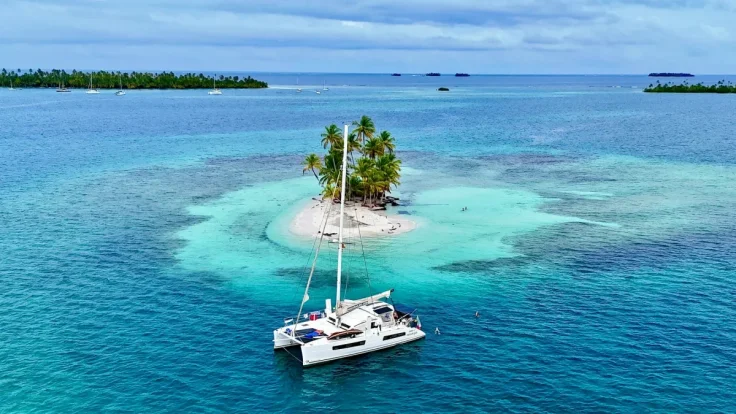
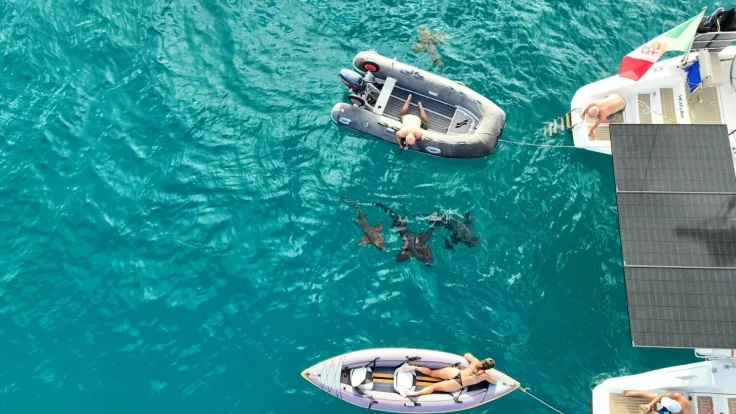
While the first cold weather arrives in Italy and winter approaches, the ideal sailing season begins in the Caribbean Sea. Water temperatures consistently above 26°C, moderate trade winds, and hundreds of sheltered bays make the Caribbean archipelagos the perfect destination for those seeking a warm break between November and May.
Planning a sailing or catamaran vacation in the Caribbean requires clarifying some essential operational aspects: from choosing the archipelago to managing the shared budget, the role of the skipper, and the logistics of flights and transfers.
In this practical guide, we answer the most frequently asked questions about Caribbean sailing trips to help you choose the best itinerary from Sailwiz's offerings.
-
Which Caribbean island should you choose for a sailboat or catamaran?
-
How do boarding, life on board, and the role of the skipper actually work?
-
What does the participation fee include, and how do the "ALL IN" plans differ from the standard ones?
-
What do you eat on board and how do you plan for food intolerances or preferences?
-
What vaccinations, documents, or visas are required?
-
Do you have any questions about the route, flights, or which catamaran to choose? Talk to our Sailwi experts.
Which Caribbean island should you choose for a sailboat or catamaran?
Grenadines, Martinique, and Guadeloupe (The Lesser Antilles)
The classic tropical itinerary features volcanic islands, marine reserves, and coral reefs. You'll sail using the trade winds, with memorable stops in the Tobago Cays to snorkel with turtles or among the rum distilleries of Martinique and Guadeloupe.
Ideal for: Those who love the combination of sailing, lush nature, and local French-Caribbean culture. An excellent choice for both sailing and catamaran charters.
Main ports of embarkation: Le Marin (Martinique), Pointe-à-Pitre (Guadeloupe), St. Vincent.
British Virgin Islands (BVI) and Sint Maarten
Often called the "sailing capital of the world," the BVI islands are closely packed and nestled in a natural channel protected from the ocean waves. Sailing trips are short, the sea is mostly calm, and the pace is punctuated by swimming in crystal-clear bays like The Baths in Virgin Gorda.
Ideal for: First-time boaters, family travelers, or those who suffer from sea fever and want short stops and a relaxed pace.
Main embarkation ports: Tortola (BVI), Sint Maarten.
San Blas Archipelago (Panama)
Over 300 pristine atolls managed by the indigenous Guna Yala community. There are no large marinas, resorts, or mass tourism here: life is lived to the rhythm of the sea, anchored in turquoise bays among coconut palms and pristine coral reefs.
Ideal for: Those seeking total disconnection, wilderness, and an authentic experience away from traditional commercial circuits.
Main embarkation ports: Corazón de Jesús / Guna Yala (Panama).
Bahamas and Exumas
A labyrinth of exposed sandbars, shallow turquoise waters, and uninhabited islands. Navigation is mostly by motorboat or light winds among the famous shallows of the Exumas archipelago.
Ideal for: Those who prefer life at anchor, relaxing on the beach, and maximum comfort aboard modern, stable catamarans.
Primary Port of Embarkation: Palm Cay Marina (Nassau).
Long Routes and Crossings (Colombia, Panama, Saint Martin)
Itineraries from 10 to 22 days that connect multiple archipelagos or stretches of open sea, for example from Martinique to San Blas or along the coasts of Colombia and Panama.
Ideal for: Those who want to experience offshore sailing, clock up nautical miles, and try more challenging and educational sailing aboard ocean-going vessels or flotillas.
How do boarding, life on board, and the role of the skipper actually work?
To embark on a Caribbean sailing route, no sailing experience or boating license is required unless you want (and can) bring the vessel yourself, which is possible but we would be talking about an exclusive charter of a vessel.
The skipper's role: Each vessel is helmed by a professional skipper with in-depth knowledge of the archipelago. He or she takes care of navigation, managing maneuvers, and ensuring onboard safety, suggesting the most sheltered anchorages for the night and the best spots for tender trips.
Boarding method: You can choose individual boarding (cabin charter), booking a single cabin and sharing the experience with other travelers, or rent the entire boat with skipper for a private group of friends or family.
The rhythms of life on board: The day follows the natural rhythm of the sea and the weather. Typically, we sail for a few hours in the morning, taking advantage of the trade winds, stopping at anchor for swimming, exploring the bay, and snorkeling. In the late afternoon, we go ashore to explore local villages, shop at the markets, or dine at the beachside kiosks. During stops, it's often possible to participate in organized activities and guided shore excursions, such as nature hikes, diving, or cultural visits.

Catamaran holidays in the San Blas Islands
,
Excursion-in-yacht-nel-Mar-dei-Caraibi
What does the participation fee include, and how do the "ALL IN" plans differ from the standard ones?
"What extra costs should I consider for a Caribbean sailing vacation?" This is one of the most frequent questions we receive from travelers.
To avoid surprises on board, Sailwiz offers always clearly indicate what's included in the price before booking. There are two main boarding options:
ALL-INCLUSIVE: The fee includes use of the vessel, the skipper's fee, the shared budget, food and beverages, fuel, marine park fees, and any mooring fees. This is the ideal solution for those who want a fixed price without having to manage expenses or the shared budget during the holiday.
Standard Formula (Cabin Charter): The fee covers the berth and the skipper's fee. The common fund is paid upon embarkation and serves to cover food, fuel, and any port charges. In the Caribbean, the average estimated cost for the common fund is between €150 and €200 per person per week; to get a more precise estimate for a specific itinerary, it's always advisable to confirm directly with the skipper or coordinator before departing.
What do you eat on board and how do you plan for food intolerances or preferences?
With the ALL-IN packages, the galley is managed directly by the crew and includes onboard meal preparation. The captain or coordinator will usually contact you before sailing to share the menu and adapt it to everyone's tastes and needs.
In standard cabin charter packages, the initial shopping is done together at local markets or supermarkets immediately after boarding: an experience within an experience, perfect for immediately immersing yourself in the local atmosphere.
Before setting sail, the skipper or the organization gathers information about allergies, food intolerances (such as celiac disease or lactose), or vegetarian or vegan diets. This exchange often takes place through a dedicated WhatsApp group, which also becomes the ideal channel to get to know the rest of the crew before meeting at the dock!
What vaccinations, documents, or visas are required?
Entry requirements vary depending on the chosen archipelago, the traveler's nationality, and the flight stops included in your itinerary.
Before planning your departure, we recommend that you always check the latest passport, visa, and health requirements through the official channels or at the embassies/consulates of the countries of destination and transit.
Attention to air transits: If the air route chosen to reach the Caribbean includes a stopover or transit in the United States or Puerto Rico, it is mandatory to request ESTA authorization online before boarding.
What to pack in your medical bag: It's good practice to bring any life-saving or personal medications, insect repellent for evening outings on land, and high-SPF sunscreen with reef-safe filters.
Do you have any questions about the route, flights, or which catamaran to choose? Talk to our Sailwi experts.
Planning a Caribbean sailing vacation is a dream come true, but it's natural to have questions before you confirm: what's the best itinerary if it's your first time sailing? Which airport is best to board from to accommodate flights from Italy? How does life on a cabin charter work if you're traveling alone or as a couple?
You don't have to find all the answers alone. The Sailwiz team of experts knows every vessel, the characteristics of the skippers, and the peculiarities of each archipelago, from the sheltered bays of the BVI to the marine reserves of the Grenadines, to the wild atolls of San Blas. Contact us before booking: we'll help you evaluate the logistics, compare boarding options (ALL IN vs. Standard), and identify the ideal route for your dates and expectations.
Would you like us to notify you about upcoming Caribbean trips?
If you can't find what you're looking for, leave your email address and you'll receive notifications about upcoming updates in this category.
What did you think of this article?