In this article, in collaboration with Ivan, a Sailwiz user since 2020, we talk about the experience of losing sight of the coast and practicing offshore sailing.
Until the 17th century, navigation was known as the Art of Seamanship or Navigation. Intuition and a seaman's instinct, acquired through experience, were necessary to be a good navigator and to determine a ship's approximate position using dead reckoning.
The position obtained by dead reckoning was sometimes so far from the real position that it was nicknamed the Fantasy Point.
In the 18th century, the difficulty of determining one's position when the coast is out of sight was eased by the invention of the sextant and the chronometer, which became fundamental tools for navigation. Today, calculating one's position is no longer a problem thanks to modern electronic devices such as GPS.
-
The challenge of high-seas sailing
-
Requirements before undertaking high-altitude navigation
-
The routine during high-seas navigation
-
A life-changing experience
-
Offshore sailing courses
The challenge of high-seas sailing
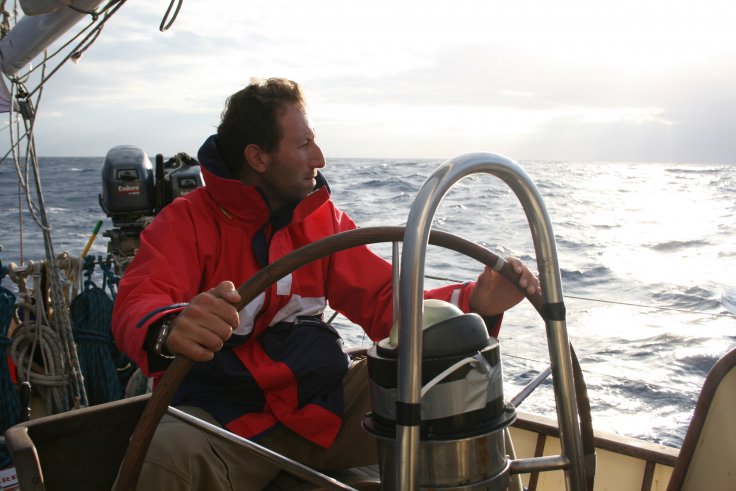
Offshore sailing has a strong element of adventure. In most cases, except for those with barnacles on their feet, we have to step outside our comfort zone. The mere sensation of being several miles or hours from land changes the sailor's perspective; it's like isolating oneself from the world, since the basic services available on land—hospitals, medicine, food, drinking water, or even entertainment—are no longer within our reach.
Out there, surrounded by the sea, we feel very small and unprotected in the vastness of the ocean, which is why deep-sea navigation is considered the greatest challenge for any sailor.
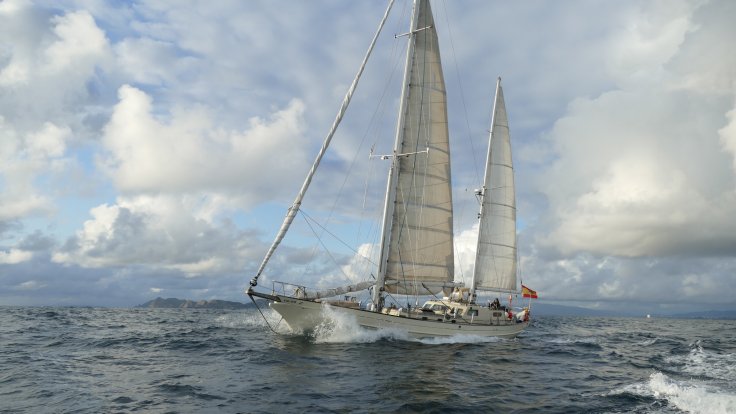
This is when the adventure begins, when our ship takes on greater importance, along with its equipment, maintenance, and proper handling. Our crewmates, the organization of watches, onboard tasks, and conversations also become crucial.

Deep-sea navigation in the Atlantic
Requirements before undertaking high-altitude navigation
Before embarking on a deep-sea voyage, it is advisable to meet certain requirements, which are not a rule as such, but which should be followed, since deep-sea voyages sometimes have no turning back.
Before embarking on this journey, it's advisable that the crew member be familiar with sailing day and night, for one or more full nights, and have lived aboard a ship, experiencing its advantages and disadvantages, for several days, sleeping on board. Even if their previous experience has only been coastal sailing, it's beneficial to have undertaken long voyages of several hours or days. They should also understand and be familiar with what it means to live and coexist in a confined space with other people.
Offshore sailing is special and unique. It demands respect, and you should trust the advice of experienced sailors before embarking and fully enjoying it.
A suitable progression before doing it would be:
- Daytime navigation in familiar waters.
- Night navigation in familiar waters, preferably watching the sunset and sunrise and sailing all night.
- Navigation for several days or a week, for example in charter mode for a week, coastal.
- One or more long coastal crossings (more than 60 miles at least)
Once the 4 steps are completed, it's time to start making your first high-altitude voyages.
Crossing from Galicia to French Brittany
The routine during high-seas navigation
When we undertake a multi-day voyage with high-altitude navigation, the days drag on. Sometimes there's no internet connection either, because although satellite solutions exist, they aren't always effective in terms of speed and coverage, and are sometimes very expensive.
What do you do for so many hours on board? Keep in mind that during navigation, even when stationary, our body is in constant motion, and we often compensate for this movement, even unconsciously, to maintain balance. This leads to much greater fatigue than being on land, which increases if we are under the sun for many hours.
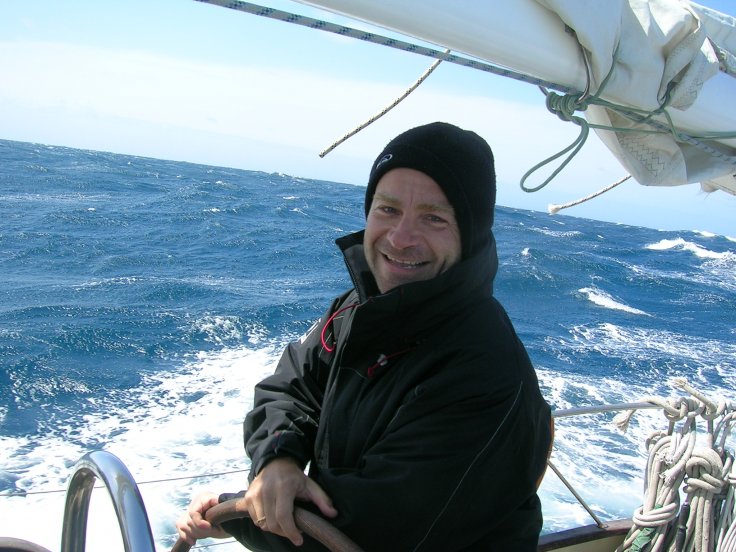
On offshore voyages, you sleep a lot, usually in the form of naps of varying lengths. This is how you recover from fatigue and prepare for watch shifts with the rest of the crew. When you're not sleeping, there's plenty to do: steer, monitor navigation, check weather reports and decide on the route accordingly, learn ocean navigation, inspect ship components and perform preventative maintenance, or trim the sails.
You also have to organize yourself to clean the boat, cook, collect food, clean eating utensils or fish.
Typical entertainment includes watching sunrises and sunsets, observing marine life and stars, reading, chatting, playing card games, meditating, or doing some exercise.
Crossing from the Canary Islands to Cape Verde
A life-changing experience
Offshore sailing is nothing like a few hours of coastal sailing. Mentally, it puts you on high alert, and you forge a closer bond with the crew. It allows you to get to know yourself outside your comfort zone.
For many sailing enthusiasts, experiencing one or more offshore sailing trips is what allows them to "click" in their heads and feel like true sailors.
Offshore Navigation - Skipper
Offshore sailing courses
Offshore navigation training is not as common as coastal navigation training. Even the practical training for a Yacht Skipper's Certificate, which qualifies you to navigate offshore up to 150 miles from the coast, is often conducted without ever losing sight of the shore.
Offshore Navigation Course
This is very interesting for those planning to cross the Atlantic at some point. A course in offshore navigation, along with some voyages to gain experience on board, is ideal before attempting the Atlantic crossing.
Would you like us to notify you about upcoming offshore sailings?
If you can't find what you're looking for, leave your email address and you'll receive notifications about upcoming updates in this category.
-
-
Ivan P.
Professional sailor with extensive experience in training, management, and nautical chartering. Marine biologist with extensive experience in fisheries management and outreach.
What did you think of this article?
The average rating is 5/5